Mostrando entradas con la etiqueta The war on drug trafficking. Mostrar todas las entradas

lunes, 14 de noviembre de 2022

The War on Drug Trafficking, the longest civil war in Latin America

America has suffered from its civil wars more than any other type of war throughout its history. We call civil wars when the army of a country uses its weapons and soldiers against the population and this reacts by using force, or weapons against its soldiers. This is different than conventional warfare, in which the armies of two or more countries or kingdoms face each other.

The first civil war was suffered by the Latin American countries that had been experiencing disputes over the presidencies and governments since their independence, which began at the beginning of the 19th century.

In Ecuador, the first civil war was called the War of the Chiguallos and it was a popular uprising repressed by the army, during the government of the first president of Ecuador, Juan José Flores, and this was similar to the rest of the Latin American countries. But in the United States, it had a colossal dimension. His Civil War killed more than 700,000 inhabitants, of a country that at that time did not even have 7 million, that is, more than 10% of the population. It was mainly due to the fact that repetition weapons were invented in that country, the machine gun, battleships, submarines, or military balloons, it was a revolution in the industrial production of weapons.

In Latin America, civil wars produced fearsome dictators such as the Duvaliers in Haiti, Trujillo in the Dominican Republic, Somoza in Nicaragua, Castro in Cuba, Ortega in Nicaragua, numerous dictatorships in the rest, such as those of Pinochet in Chile, the military in Argentina, Uruguay, Brazil, Stroessner in Paraguay, many in Bolivia, and in Peru, such as that of Fujimori, which was an electoral dictatorship of the right, in which the dictator won elections, and this president used the army against his people, with the excuse of the War against the Shining Path, or the electoral dictatorship of Maduro against the USA.

In Colombia, on the other hand, there was the longest civil war in the history of the Continent, possibly the World, between conservatives and liberals, which was very well used by the United States to make Panama independent, and then take that country to build the Panama Canal, which is the main infrastructure built by this country outside its territory. But this war of the Thousand Days later became the anti-communist war, which the United States started in the 1960s with the Bay of Pigs invasion in Cuba, and spread as civil wars throughout Latin America, in which the armies of our countries did not shoot at soldiers of other countries, but at their population.

The Anti-subversive or anti-communist War became a war on drug trafficking when the USSR fell, the Colombian guerrillas stopped being financed and armed by this country or Cuba and sought forms of self-financing, which was possible thanks to drug trafficking, kidnapping, and extortion or vaccinations of peasant people and towns, the first place where they recruited guerrillas, who later, like the cartels recruiting hitmen, did so among the gamines, or poor boys from the cities, who gave rise to the North American mafia and the drug cartels in Latin America.

Since the origin of Latin American countries, civil wars were firstly over land, which forced agrarian reforms in many countries, but in Colombia it was impossible, then the separation of the Church, which was the largest landowner and educator in the country. State, which originated the so-called Liberal Revolutions.

Currently, the war is for political participation, since the USSR was also the main financier of unions and trainer of union or indigenous leaders, who could send their children to study for free in that country, in the countries of the Warsaw Pact, or in Cuba.

When the street protest became a political weapon thanks to women, workers, students, Gandi, Mandela, and Afro-Americans, who saw themselves outside the rights and benefits of the so-called development society, the one that qualifies countries by developed countries and developing or underdeveloped countries, based on the level of industrialization they reach, our armies have become the main actors in the civil war against demonstrators in Latin America, and they are becoming so again in the United States.

Today Colombia, Mexico, Peru, Guatemala, Honduras, El Salvador or Ecuador are experiencing a new civil war called the War on Drug Trafficking, against the cartels and the gangs.

This is a civil war that has been going on for 40 years, which is being won by drug traffickers, gangs and cartels, armies and police formed, trained, equipped, and even directed by the State Department, the DEA, the CIA, or the Department of Justice of the United States, through puppet presidents, who win elections in costly and tricky electoral campaigns and which is also a big arms business, for both sides, the armies and the drug traffickers.

domingo, 23 de octubre de 2022

The Covid pandemic, the crisis and the War on Drug Trafficking mark the way back from La Gran Colombia


Despite living in the three richest countries in South America, for its natural wealth, for having rivers, mountains, beaches, jungles, valleys, minerals, oil, plantations, cities, towns, cultures, direct access to the Pacific Ocean, and the Atlantic Ocean, having the largest amount of water and biodiversity per km2, suffering hunger, poverty, unemployment, pests, blockades and economic wars as in Venezuela, or poor distribution of food, wealth, health, or knowledge, and information, as in Colombia and Ecuador, which are concentrated in the rich, drug traffickers, corrupt public officials, ports and cities, or is looted by transnationals, exporters, bankers, governments, who are used to multiply poverty, over-exploitation of workers, of consumers, of natural resources.


Poverty, violence, diseases such as covid 19, and bad governments, have created an economic crisis that has hit these three countries, turning their inhabitants into outcast beggars on the planet, who form migratory waves to escape from them.

But at the same time Venezuela, Colombia, and Ecuador have been the main refuge for Venezuelans, Colombians, or Ecuadorians when bad times, bad governments, civil wars, or now in the War on Drugs, or due to the US blockade of Venezuela.

The War on Drug Trafficking to stop the production of cocaine has impoverished Ecuador and Colombia because these countries pay soldiers, policemen, judges, and journalists who need good salaries, weapons, expensive training, food, equipment, logistics, etc, etc, including prizes and rewards, paid by the inhabitants of those countries, through taxes, low wages, and low prices for their products, they also suffer from the forced recruitment of young people and the murder of innocents. The war on drug trafficking has united the police, the army, and the justice system of these countries to carry out joint operations, but at the same time it has created drug traffickers, laboratories, and now low-intensity civil wars that circumvent borders, have disappeared the borders between the three countries. The problem is that these nations are experiencing the concentration of power, wealth, and knowledge in a few hands, the insanity of getting rich quickly, and the United States is experiencing the insanity of drug use, which has now become the main social lubricant, since The ability to relate between human beings in this country hit by covid 19, which during the conquest of the West was mediated by alcohol, is now mediated by hallucinogenic drugs. In addition, since the origin of humanity, drugs have been an important precursor of human imagination and creativity, closely linked to art, and religion, already in World War II, the Russians used wodka, the Americans tobacco, and cocaine, and the Germans amphetamines.

Today in Ecuador, Colombia, and Venezuela, we have to pay the police, the army, the judges and prosecutors, and the journalists, we also have to pay for food, surveillance, and infrastructure or services in prisons, and as in In the United States, prisons have become universities of crime, prisoners are the most expensive inhabitants to maintain in our countries, they cost more than university students and in poor countries, the problem is more serious, because they do not produce anything, they are a burden.

Prisons are where prisoners learn to use everything within their reach, they associate with transnational cartels that recruit them, but they also have to be fed, re-educated, clothed, cured, and guarded, the cost of this is paid by Ecuadorians or Colombians, not the North Americans whom we serve for free.

 The police, the army, the fiscal judges, and the prisons with all their personnel, infrastructure, operational and infrastructure costs, even the water and electricity consumed in the prisons, as well as food or medicine, must be paid for and managed by the United States.

The prisons and the war on drug trafficking affect us, we are centers of operations and recruitment of drug traffickers who even put in place presidents, as happened in Honduras and Panama.

The legalization of marijuana made the United States its main producer and exporter, the same is going to happen with cocaine. In addition, the United States is already the main producer and exporter of opiates, it competes with China in the production and export of fentanyl, it is the main producer and exporter of opiates, oxycodone or LSD, but the most serious weapon for the drug cartels. and for the armies that fight them.

The crises in Colombia, Ecuador, and Venezuela lead them to become THE GREAT COLOMBIA again, without borders between them, triple nationality for its inhabitants, and a federal government.


lunes, 2 de agosto de 2021

The war on drug trafficking is the retro-invasion war against the United States and Europe that is being won by Latin America

The war on drug trafficking as well as the war on communism are traps by the USA to manage the police, justice, the legislature and the army in Latin America, which allocates enormous resources that enrich the USA and Europe and the local cartels, saving the The United States and Europe, where the expensive markets and consumers are.

 They are the ones who set the price and create the demand that the cartels create and these permeate the borders, helping the survival of the informal within those rich states, that is, they help us to invade rich countries, like one day alcohol and alcoholics and opium and drug addicts, helped European conquerors, pirates, settlers and merchants to conquer the world.

For this war, which we are winning, the legalization of cocaine would be a blow to the Latino invaders, but poverty, the pandemic and the economic crisis make, for today, irreversible this historical process, in which it repeats what happened with empires such as the Roman Empire, in which the barbarians, against whom Rome fought for centuries, finally invaded and destroyed it

Legalizar la cocaína: América Latina lidera el debate

¿Podría ser la fórmula para acabar con el narcotráfico y la violencia asociada, o incentivaría un mayor consumo? Argumentos académicos y políticos, y un proyecto de ley en Colombia, despiertan la discusión en la región.

    
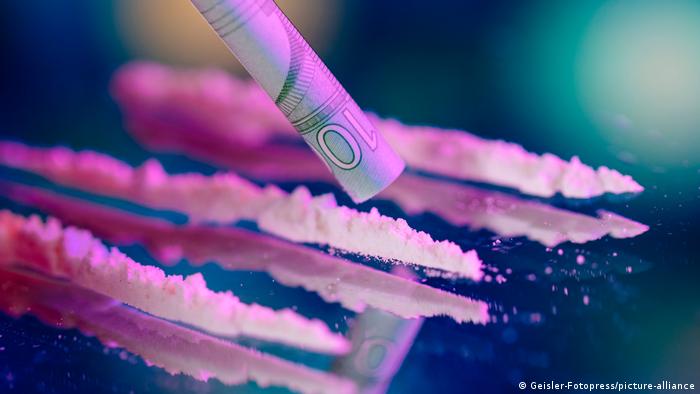
Symbolfoto Kokain-Konsum

La apuesta es cambiar el paradigma en el combate contra el tráfico de drogas: legalizar en vez de prohibir y, con ello, terminar con el mercado negro, los carteles y el crimen asociado. En Colombia, un proyecto de ley que establece un marco regulatorio de la hoja de coca y sus derivados fue aprobado en su primer debate en el Congreso. En Chile, el ex candidato presidencial Daniel Jadue, del Partido Comunista, propuso un sistema de este tipo en su programa y, en México, organizaciones que investigan sobre políticas públicas y criminalidad, como el Instituto RIA y la ONG México Unido contra la Delincuencia, promueven la discusión del tema. Desde la Comisión Latinoamericana sobre Drogas y Democracia se suman intelectuales y políticos, incluidos ex presidentes como el mexicano Ernesto Zedillo, el chileno Ricardo Lagos, el brasilero Fernando Henrique Cardoso y el colombiano César Gaviria, para revisar las políticas de guerra contra el narcotráfico y entregar recomendaciones para lidiar con el tema. Zedillo reconoció: "Yo seguí una política equivocada”, en relación a la prohibición y criminalización, que habría traído mayores problemas de salud pública y violaciones a los derechos humanos.

"Una guerra que no se ha ganado en 40 años es una guerra perdida. Hay que reinventar esta guerra contra el narcotráfico y las drogas y una de las formas más efectivas es quitarle la prohibición a todo lo que tiene que ver hoy con el tráfico de drogas, y racionalizarlo para poderlo controlar mejor”, señaló el expresidente colombiano Juan Manuel Santos en entrevista con la agencia EFE. El economista Luis Carlos Reyes, de la Universidad Javeriana de Colombia, quien ha investigado el tema de los cultivos ilícitos, coincide. "Desde distintas ciencias sociales, economistas, criminólogos y politólogos han llegado a la conclusión casi unánime de que las políticas que tenemos para reducir la oferta de cocaína en el mercado mundial son completamente ineficaces”, dice a DW. La propuesta de regular legalmente la cocaína no viene de personas interesadas en el consumo de drogas, sino de quienes abogan por tratarlo como un problema de salud pública, explica.

Control gubernamental en vez de control criminal

Steve Rolles, analista de la Fundación Transform Drug Policy, quien ha asesorado a los parlamentarios colombianos en el proyecto de ley, dice a DW que la iniciativa regulatoria supone desafíos, "pero es un progreso comparado con el actual control del mercado por carteles violentos y dealers callejeros”.

"Si cambiamos eso por un mercado en que el gobierno controle la producción, haya un proceso de control de calidad y el producto sea vendido por distribuidores licenciados, existe la posibilidad de tener menos crímenes, eliminar un impulsor de corrupción y mejorar la salud pública”, agrega Rolles. En opinión de Reyes, una de las ventajas es que acaba con el tráfico ilegal como negocio lucrativo. "La cocaína es un producto vegetal medianamente procesado, que es muy barato de producir, pero no tenemos un cartel de la papa o la zanahoria. Si la cocaína es costosa es por su ilegalidad, porque persiguen a narcotraficantes, vendedores y consumidores y hacen que sea muy costosa y al haber tanto dinero se financia una actividad muy peligrosa. Si se legaliza el consumo, se acaban el negocio de los actores ilegales y el terrorismo que surge alrededor”, afirma.

Temor ante riesgo de mayor acceso

Uno de los argumentos en contra de la legalización es que podría facilitar el mayor consumo y acceso a personas que de otro modo no probarían la droga. "El supuesto implícito es que estas políticas de prohibición están reduciendo en algo la oferta o el consumo y toda la evidencia que tenemos es que no lo están haciendo y además tienen un costo social muy grande”, subraya Reyes. En opinión de Rolles, "hoy todos tienen acceso a las drogas porque están fácilmente disponibles en las calles. Es un mito pensar que hacer una droga legal la va a hacer más disponible”.

Cocaína.

Según datos del Informe Mundial sobre las Drogas, de las ONU, en los últimos diez años aumentaron en un 22% los consumidores de droga, llegando a 275 millones. Las muertes relacionadas con consumo se duplicaron en ese período.

Los expertos proponen un mercado altamente regulado por el Estado, incluso más que el del alcohol y cigarrillos, una agencia que controle la producción, un impuesto importante y prohibiciones de publicidad y de acceso a menores. Con un registro y licencia para el consumo, la venta sería como la de un producto farmacéutico, con una cantidad racionalizada para uso personal, y paquetes con amplia y clara información sobre uso responsable y riesgos. "Uno tiene que hacer el cálculo social de quién prefiere que se perjudique por la producción y el consumo de estas drogas: quien de manera autónoma decide consumirlas o todas las víctimas que son daño colateral de una política que incluso no reduce mucho el consumo”, postula Reyes. El dinero recaudado y los recursos que hoy se usan en militarización, erradicación de cultivos y guerra contra el narcotráfico podrían destinarse a intervenciones de salud pública, campañas de educación y prevención, y tratamiento de personas con adicciones. Como ocurre con el alcohol, siempre habrá quienes hagan un mal uso, advierte Rolles: "La prohibición y el suministro ilegal aumentan los riesgos, mientras que un mercado regulado los reduce. Se trata de disminuirlos, pero es imposible eliminarlos todos”.

Volume 90%
 
Ver el video02:57

Tráfico de cocaína, un negocio como cualquier otro

¿Modelo para América Latina?

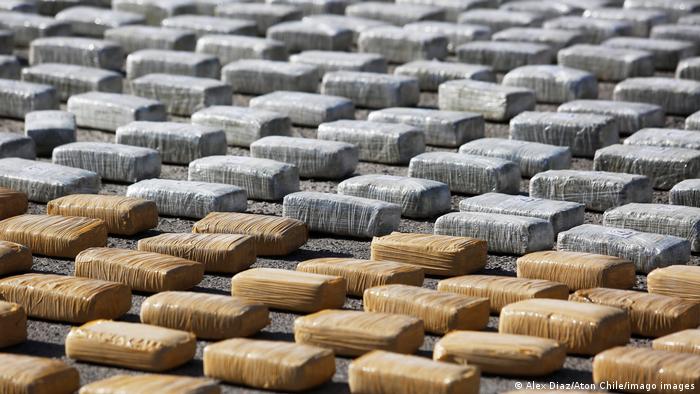
De convertirse en ley, la regulación del consumo no necesariamente impactará en la industria ilegal, que se ha adaptado ante la persecución y en vez de grandes carteles hoy funciona con un mercado fragmentado de narcotraficantes de menor tamaño. Casi el 99% de la cocaína colombiana es exportada, principalmente a Estados Unidos y Europa, y los carteles podrían seguir controlando ese mercado. En ese sentido, una estrategia coordinada a nivel global supondría mayor impacto.

Rolles adelanta que la regulación legal "no es una solución mágica, pero es la posibilidad de un gran avance, también en desarrollo y seguridad para los productores, personas pobres, marginadas o desplazadas, empujadas al cultivo de hojas de coca por necesidad y que terminaron en el mercado ilegal”. El especialista británico cree que "es posible innovar y desarrollar nuevas políticas en torno a la cocaína, que podrían ser adoptadas por otros países. De manera similar como Uruguay fue el primero en legalizar el cannabis y ahora ese debate se repite en América Latina y gran parte del mundo, Colombia está mostrando un liderazgo en el tema de la regulación de la cocaína y cómo podemos terminar con esta guerra”.

DW RECOMIENDA

Cómo del poder de CNN puede derrocar gobiernos en América Latina

En el sigo XIX Pultitzer el dueño del periódico más leído en Estados Unidos en ese momento, impulsó a Estados Unidos a invadir Cuba, mediant...